ถอดบทเรียน “Tacit Knowledge” อาจารย์นิติฯ มช. สู่ความเป็นเลิศในการจัดการเรียนการสอนแบบ Active Learning ประจำปี 2568
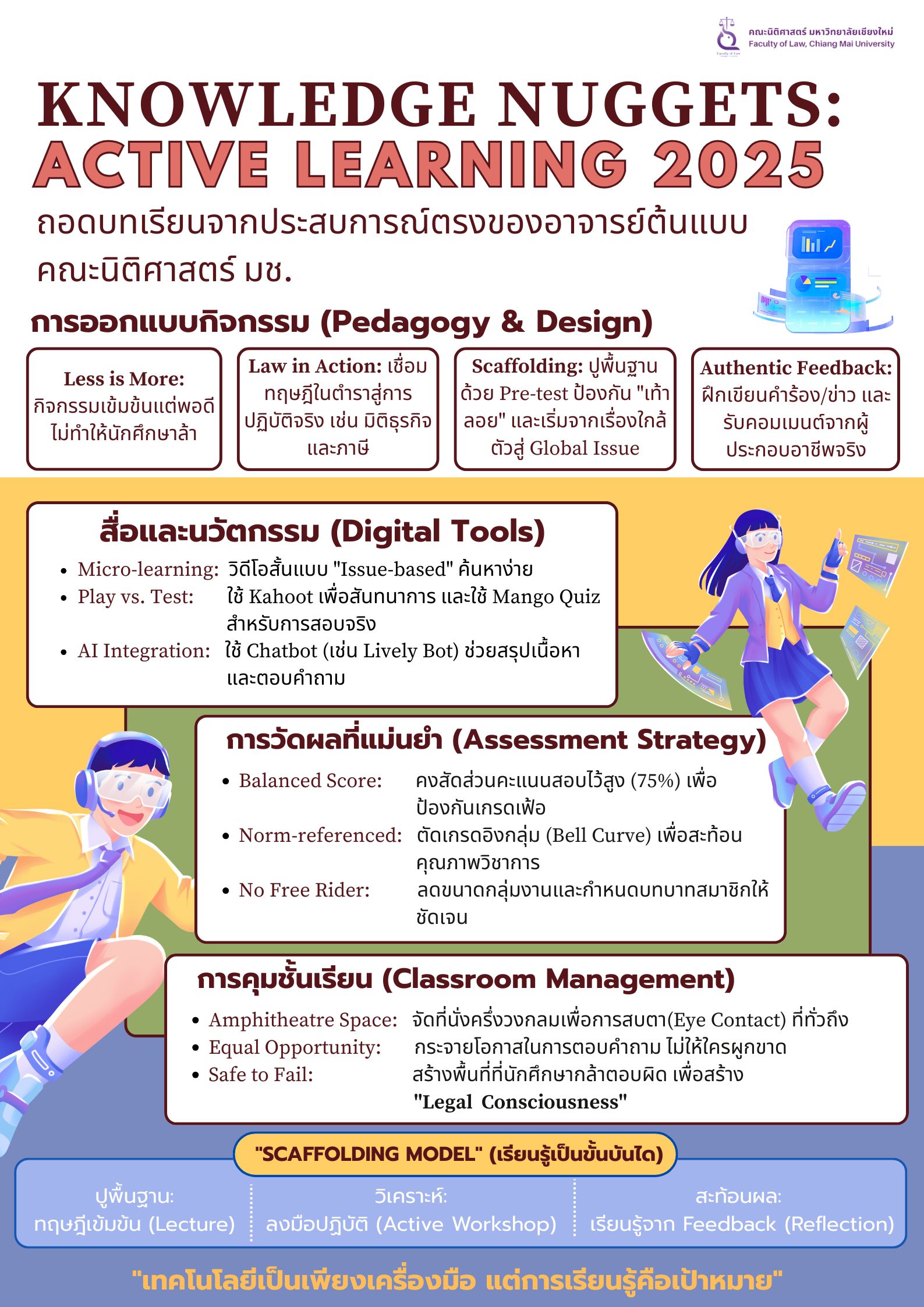
คณะนิติศาสตร์ มหาวิทยาลัยเชียงใหม่ จัดกิจกรรมแลกเปลี่ยนเรียนรู้และถอดบทเรียนการจัดการเรียนการสอนในรูปแบบ Active Learning ประจำปี 2568 โดยมุ่งเน้นการดึง “ความรู้ฝังลึก” (Tacit Knowledge) จากประสบการณ์ตรงของอาจารย์ต้นแบบ เพื่อสร้างโมเดลการเรียนรู้กฎหมายที่ทันสมัยและมีประสิทธิภาพสูงสุดสำหรับนักศึกษา โดยสรุปประเด็นสำคัญได้ 4 มิติหลัก ดังนี้:
1. การออกแบบกิจกรรม (Pedagogy & Design): เน้นคุณภาพมากกว่าปริมาณ
การเรียนกฎหมายในยุคใหม่ต้องก้าวข้ามตำราสู่การปฏิบัติจริง โดยมีหัวใจสำคัญคือ:
- Less is More: จัดกิจกรรมที่เข้มข้นในระดับที่พอดี ไม่สร้างภาระให้นักศึกษาจนเกินไปเพื่อให้เกิดการเรียนรู้ที่มีประสิทธิภาพ
- Bridge the Gap: สร้างสะพานเชื่อมระหว่าง Law in Book (ทฤษฎี) และ Law in Action (การปฏิบัติ) โดยเฉพาะมิติธุรกิจและภาษีที่มักไม่มีในตำรา
- Scaffolding: การปูพื้นฐานเป็นขั้นบันได ตั้งแต่การทำ Pre-test เพื่อเช็คความพร้อม ไปจนถึงการจัดลำดับเนื้อหาจากเรื่องใกล้ตัวสู่ระดับสากล
- Authentic Assessment: ใช้กรณีศึกษาจริง (Project-Based) และเชิญผู้เชี่ยวชาญในวิชาชีพร่วมให้ Feedback แบบมืออาชีพ
2. นวัตกรรมดิจิทัล (Digital Tools): เครื่องมือเสริมเพื่อการเรียนรู้ที่ตรงจุด
คณะฯ สนับสนุนการใช้เทคโนโลยีอย่างมีกลยุทธ์ ไม่ใช่เพียงเพื่อความทันสมัย:
- Micro-learning: การทำคลิปวิดีโอแบบสั้น แยกตามประเด็น (Issue-based) เพื่อให้ง่ายต่อการทบทวน
- Tool Differentiation: แยกแยะการใช้เครื่องมือให้ชัดเจน เช่น ใช้ Kahoot เพื่อสันทนาการ และใช้ Mango Quiz สำหรับการวัดผลทางวิชาการ
- AI Integration: การนำ AI Chatbot (Lively Bot / Matthew AI) เข้ามาช่วยสนับสนุนการตอบคำถามและสรุปเนื้อหา
3. กลยุทธ์การวัดผล (Assessment): ยุติธรรมและสะท้อนความจริง
เพื่อป้องกันปัญหา “เกรดเฟ้อ” และสร้างมาตรฐานทางวิชาการที่เข้มแข็ง:
- Balanced Scoring: กำหนดสัดส่วนคะแนนสอบให้มีน้ำหนักสูง (ประมาณ 75%) ควบคู่ไปกับคะแนนกิจกรรม เพื่อรักษาคุณภาพมาตรฐานทางวิชาการ
- Norm-referenced Grading: ใช้การตัดเกรดแบบอิงกลุ่ม (Bell Curve) ในรายวิชาที่มีกิจกรรมช่วยเยอะ เพื่อให้เกรดสะท้อนความสามารถที่แท้จริง
- Small Group Management: ลดขนาดกลุ่มทำงานเพื่อป้องกันปัญหา “Free Rider” (ตัวประกอบในงานกลุ่ม) และเน้นการกระจายบทบาทให้ชัดเจน
4. สภาพแวดล้อมและการจัดการ (Classroom Management): สร้างพื้นที่ปลอดภัย
บรรยากาศการเรียนรู้คือหัวใจสำคัญของการมีส่วนร่วม:
- Physical Space: แนะนำการจัดห้องเรียนแบบ “ครึ่งวงกลม” (Amphitheatre) เพื่อลดมุมอับสายตาและสร้าง Eye Contact ระหว่างผู้สอนและผู้เรียน
- Inclusive Environment: การจัดการกับนักศึกษาที่โดดเด่น (Dominant) เพื่อกระจายโอกาสให้เพื่อนทุกคนได้มีส่วนร่วม
- Safe Zone: สร้างวัฒนธรรม “กล้าผิด” ให้นักศึกษารู้สึกปลอดภัยที่จะตอบคำถาม เพื่อสร้างภูมิคุ้มกันทางความคิด (Legal Consciousness)
บทสรุป: Scaffolding Model กุญแจสำคัญที่ได้จากการถอดบทเรียนครั้งนี้คือโมเดลการเรียนรู้ที่เป็นขั้นบันได เริ่มจากการปูพื้นฐาน (Asynchronous/Lecture) นำไปสู่การวิเคราะห์และปฏิบัติ (Active Workshop) และปิดท้ายด้วยการสะท้อนผล (Feedback/Reflection) โดยใช้เทคโนโลยีดิจิทัลเป็น “เครื่องมือ” สนับสนุนเพื่อมุ่งสู่เป้าหมายคือการสร้างนักกฎหมายที่มีคุณภาพในศตวรรษที่ 21
Podcast (พอดแคสต์): ถอดบทเรียนจากประสบการณ์ตรงของอาจารย์ต้นแบบ คณะนิติศาสตร์ มช.
Extracting “Tacit Knowledge”: CMU Law Unveils Active Learning Insights and Best Practices for 2025
The Faculty of Law, Chiang Mai University, has concluded its 2025 Knowledge Management (KM) session, focusing on “Active Learning Lesson Extraction.” This initiative aims to capture “Tacit Knowledge”—the deep, experience-based insights from distinguished faculty members—to refine the legal education model for the modern era.
The findings are categorized into four strategic pillars:
1. Pedagogy & Design: “Less is More” and Real-World Connectivity
Effective legal education must bridge the gap between textbook theory and professional reality. Key takeaways include:
- The “Less is More” Principle: Activity design should be potent yet balanced, ensuring students achieve maximum learning efficiency without exhaustion.
- Bridging “Law in Book” to “Law in Action”: Emphasizing practical dimensions such as business context, taxation, and cost management—crucial elements often absent from traditional legal texts.
- Scaffolding & Pre-testing: Utilizing pre-tests to prevent “floating feet” (practical skills without a solid theoretical foundation) and structuring content from local relatable issues to global challenges.
- Project-Based & Authentic Assessment: Engaging students with real-world case studies and inviting industry professionals to provide high-level feedback.
2. Digital Tools & Innovation: Purpose-Driven Technology
Digital integration must serve specific educational objectives rather than just following trends:
- Micro-learning (Issue-based): Developing concise, topic-specific videos for “Flipped Classrooms,” allowing students to easily search and review specific legal points.
- Tool Differentiation: Distinguishing between “Engagement Tools” (e.g., Kahoot for non-graded check-ins) and “Assessment Tools” (e.g., Mango Quiz for formal evaluation) to ensure clarity in grading.
- AI Integration: Utilizing AI Chatbots (such as Lively Bot or Matthew AI) to support student inquiries, with a focus on designing incentives that encourage student interaction with these tools.
3. Assessment Strategy: Combating Grade Inflation
To maintain academic rigor and ensure grades accurately reflect student competence:
- Optimal Grading Ratios: Recommending a high weight for final examinations (approx. 75%) alongside activity-based scores (20-25%) to prevent “grade inflation” where practical scores might overshadow theoretical weakness.
- Norm-referenced Grading: Implementing “Bell Curve” grading for courses with high participation points to maintain academic standards.
- Eliminating “Free Riders”: Reducing group sizes and clearly defining individual roles within projects to ensure every student contributes significantly.
4. Classroom Management: Creating a “Safe to Fail” Culture
The physical and psychological environment is vital for active participation:
- Physical Space Optimization: Moving away from traditional row seating toward “Amphitheatre” or circular layouts to eliminate blind spots and foster direct eye contact between instructors and students.
- Managing Dominant Students: Ensuring instructors facilitate balanced participation, preventing a few students from monopolizing discussions.
- Legal Consciousness & The Safe Zone: Cultivating an atmosphere where students feel safe to provide incorrect answers, emphasizing that “learning from mistakes” is a core part of developing legal intuition.
Key Takeaway: The Scaffolding Model
The consensus among the faculty is the adoption of the “Scaffolding Model.” This step-by-step journey begins with Asynchronous Foundation Building, moves into Active Workshops (Practice), and concludes with Reflection and Feedback. In this model, digital technology acts as a powerful “enabler” rather than the ultimate goal.